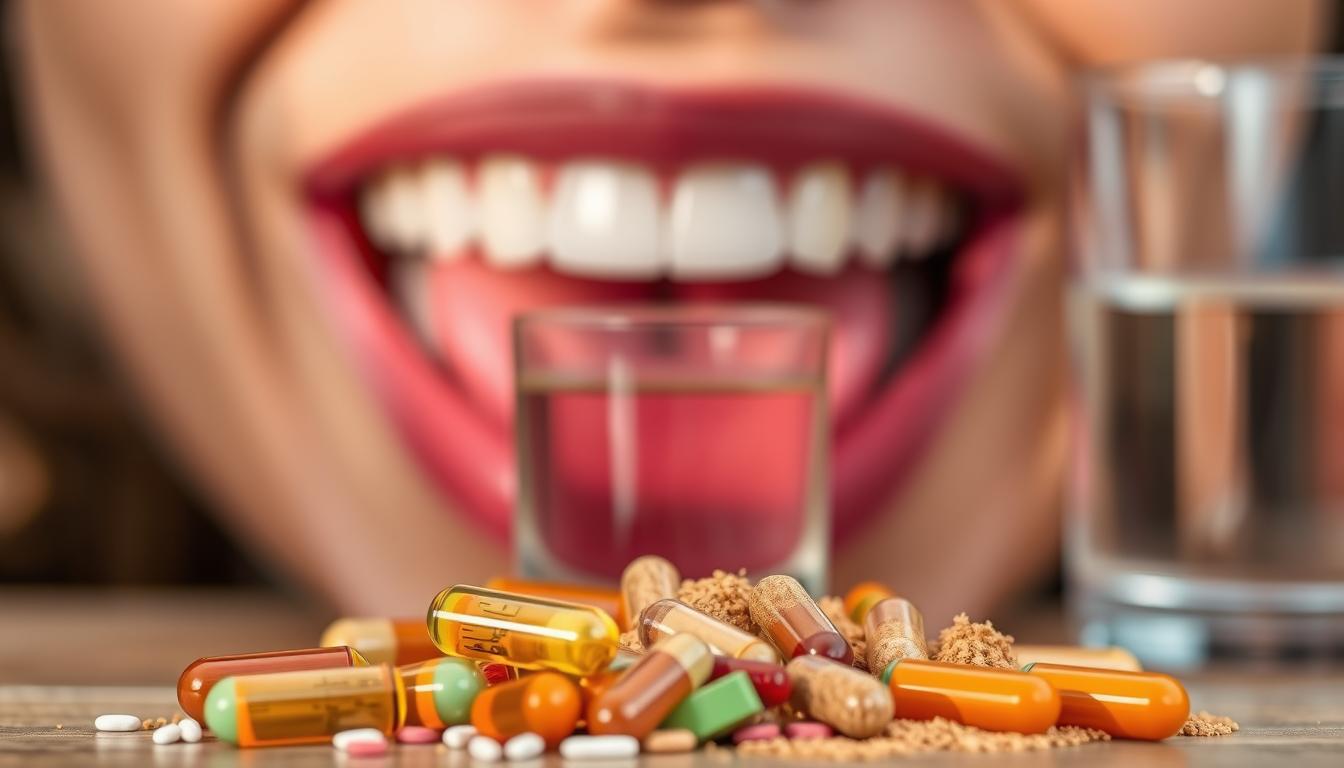
Exploring oral health has shown me the big benefits of probiotics. They help keep our mouths healthy. This makes our smiles shine brighter.
Adding probiotics for oral health and fresh breath to your day can change your mouth’s health a lot. With more people looking for natural ways to keep their mouths healthy, knowing about probiotics is key.
Key Takeaways
- Probiotics can help maintain a healthy oral microbiome.
- Using probiotics can lead to fresher breath and improved oral health.
- Incorporating probiotics into your daily routine is a simple and effective way to support oral well-being.
- Probiotics can help prevent oral health issues.
- A healthy mouth is linked to overall well-being.
Understanding Probiotics and Their Benefits
Probiotics do more than just help our gut health. They also play a big role in keeping our mouths healthy. To see how probiotics help our teeth and gums, we need to know what they are and how they work.
What Are Probiotics?
Probiotics are live good bacteria that help us stay healthy. They are like the good guys in our bodies, especially in our guts and mouths.
Key Characteristics of Probiotics:
- Live microorganisms
- Provide health benefits
- Effective in adequate amounts
The Science Behind Probiotics
Probiotics keep our mouths in balance. This balance is key to avoiding problems like bad breath, cavities, and gum disease.
Research has shown that probiotics can stop bad bacteria from growing. This helps lower the chance of getting oral infections.
| Benefit | Description |
|---|---|
| Maintaining Oral Flora Balance | Probiotics keep the good and bad bacteria in our mouths balanced. |
| Reducing Oral Infections | By stopping bad bacteria, probiotics help prevent oral infections. |
| Enhancing Oral Hygiene | Probiotics help keep our mouths healthy by creating a good environment. |
How Probiotics Work in Oral Health
Probiotics fill our mouths with good bacteria. This pushes out the bad bacteria. It helps cut down on plaque, stops gingivitis, and makes our breath fresh.
The Mechanism of Action:
- Colonization of beneficial bacteria
- Competition with harmful bacteria for space and resources
- Production of antimicrobial substances
Knowing how probiotics work helps us use them wisely in our oral care routine.
The Connection Between Oral Health and Gut Health
The link between oral health and gut health is getting more attention. Research shows that our mouth and gut health are closely connected. This connection is key to understanding our overall health.
Why Gut Health Matters
Gut health is vital for our well-being. It affects digestion, our immune system, mental health, and even our oral health. The gut microbiome makes important vitamins and hormones for our body’s balance. An imbalance in the gut can cause health problems, including oral health issues.
How Oral Flora and Gut Flora Interact
The mouth and gut are connected through the digestive tract. Studies show that bacteria in the mouth can affect the gut and vice versa. This shows how important it is to keep a healthy balance of bacteria in both places.
Understanding the link between oral and gut health helps us see the value of probiotics. Probiotics for teeth and gums can be a great addition to our oral care. They help keep our oral microbiome healthy, which supports a balanced gut microbiome.
Benefits of Probiotics for Oral Health
Probiotics are great for keeping your mouth healthy. Adding them to your oral care can really improve your hygiene.
Reducing Bad Breath
Probiotics are amazing at cutting down bad breath. Probiotics for bad breath are getting more popular because they work well. They keep your mouth’s bacteria in balance, making your breath smell better.
Using probiotic toothpaste for fresh breath is a smart move. It can make your breath smell fresher and boost your confidence.
Fighting Cavities and Tooth Decay
Probiotics are also good at stopping cavities and tooth decay. They reduce harmful bacteria in your mouth. This helps keep your teeth healthy.
Using probiotics can mean fewer cavities. This means you might need fewer fillings and less dental work.
Preventing Gum Disease
Gum disease is common but probiotics can help. They keep your mouth’s bacteria balanced and reduce swelling.
Adding probiotics to your routine can lower your risk of gum disease. It helps keep your mouth healthy overall.
Choosing the Right Probiotics for Oral Health
Finding the perfect probiotic for oral health can be tough with so many choices. It’s key to know which probiotics are good for your mouth and what to look for in products.
Types of Probiotics for Oral Care
There are many probiotic strains, each with its own benefits for your mouth. Lactobacillus and Bifidobacterium are two common ones. They help keep your mouth healthy by stopping bad bacteria.
- Lactobacillus strains stick to your mouth and help keep it healthy.
- Bifidobacterium species help keep your mouth’s bacteria in balance.
What to Look for in Probiotic Products
When picking a probiotic for your mouth, look at a few important things. This ensures it works well and is safe.
- Strain specificity: Make sure the product lists the probiotic strain. Different strains do different things.
- CFU count: Check the CFU (Colony-Forming Units) count. It shows how strong the probiotic is until it expires.
- Additional ingredients: Some products have extra stuff like prebiotics. These can make the probiotic work better.
By looking at these points, you can find a probiotic that’s right for your mouth.
The best probiotics for your mouth are backed by science and made for oral health. Choosing the right one helps keep your mouth healthy and your breath fresh.
Popular Probiotic Strains for Oral Health
Improving your oral health starts with knowing the right probiotic strains. Some probiotics are better than others for keeping your mouth healthy.
Lactobacillus Reuteri
Lactobacillus Reuteri is a probiotic that’s great for your mouth. It helps keep your mouth’s bacteria in balance. This can lower the chance of infections and gum disease.
Studies show it can cut down on plaque and gingivitis. This means healthier gums and fresher breath.
Streptococcus Salivarius
Streptococcus Salivarius is also good for your mouth. It’s a natural part of your mouth’s bacteria. It helps stop bad bacteria from growing.
This strain is known for keeping your breath fresh. It also helps prevent bad breath.
Bifidobacterium Species
The Bifidobacterium species are known for gut health. But they also help your mouth. They keep your mouth’s bacteria in balance, which can lower disease risk.
Research is still going on, but they’re good for overall health. They’re worth considering for your wellness.
Adding these probiotics to your oral care can help a lot. But always talk to a doctor before starting any new supplements.
Incorporating Probiotics into Daily Dental Routine
Adding probiotics to your daily dental care can boost your oral health. There are many ways to use probiotics, so you can pick what works best for you.
Probiotic Supplements
Probiotic supplements are easy to use for better oral health. They have live bacteria that keep your mouth’s bacteria in balance. When picking a probiotic supplement, choose ones made for oral health.
Key benefits of probiotic supplements include:
- Easy to add to your daily routine
- Includes strains good for your mouth
- Works well with other oral care products
Probiotic-Rich Foods
Eating probiotic-rich foods also helps your oral health. Foods like yogurt, kefir, and fermented veggies have live cultures. These cultures help keep your mouth’s bacteria healthy.
Some examples of probiotic-rich foods include:
- Yogurt with live cultures
- Kefir
- Fermented veggies like sauerkraut and kimchi
Probiotic Mouthwashes
Probiotic mouthwashes are another great way to add probiotics to your routine. They have good bacteria that fight off bad bacteria in your mouth.

By using probiotics in your daily dental care, you can keep your mouth healthy and fresh. You can use supplements, probiotic-rich foods, or mouthwashes to do this.
Clinical Studies Supporting Probiotics for Oral Health
Research shows that probiotics are good for our mouths. Many studies have looked into how probiotics help with oral hygiene and dental health.
Studies are showing that probiotics can help keep our mouths healthy. By looking at these studies, we learn how probiotics work and their benefits.
Overview of Key Research Findings
Recent studies have looked at how probiotics affect our mouths. They’ve found that probiotics can help with bad breath, prevent cavities, and manage gum disease. For example, Lactobacillus reuteri and Streptococcus salivarius can reduce oral health problems.
Probiotics help keep our mouths balanced. This balance stops harmful bacteria from growing. This balance is key to good oral hygiene and dental health.
Benefits Documented in Studies
Studies have shown many benefits of probiotics for our mouths. Some of these benefits include:
- Less bad breath because of fewer harmful bacteria.
- Less chance of cavities and tooth decay by stopping certain bacteria.
- Helping manage and prevent gum disease by reducing inflammation and keeping the mouth balanced.
These findings show that probiotics can greatly improve our oral health. As research grows, we’ll learn more about how probiotics help our teeth and gums.
Knowing about probiotics’ benefits for our mouths helps us make better choices. We can add these helpful microbes to our oral care routine.
Probiotics vs. Traditional Oral Care Products
Understanding the difference between probiotics and traditional oral care is key to a healthier mouth. Both methods have their good and bad sides.
The Role of Conventional Mouthwash
Mouthwashes have been around for years, killing bacteria and freshening breath quickly. But, they often have harsh chemicals that can harm the mouth’s natural balance.
Ingredients like chlorhexidine in mouthwashes can stain teeth and change taste. This has sparked interest in safer, healthier options.
Comparing Efficacy
Probiotics and traditional products differ in how they keep the mouth healthy. Probiotics add good bacteria to the mouth, helping it stay balanced.
| Product Type | Primary Function | Key Ingredients | Efficacy |
|---|---|---|---|
| Probiotic Toothpaste | Promotes oral microbiome balance | Lactobacillus, Streptococcus | Effective in reducing plaque and gingivitis |
| Conventional Mouthwash | Kills bacteria and freshens breath | Chlorhexidine, Essential Oils | Effective against bacteria, but may have side effects |
| Probiotic Mouthwash | Balances oral microbiome | Lactobacillus Reuteri | Promising results in reducing oral pathogens |
The table shows both types have benefits. Probiotic toothpaste is a natural way to keep your mouth clean. Traditional mouthwashes kill bacteria fast.
Think about what you need for your mouth when choosing. If you prefer a natural way, probiotics might be a good choice over traditional products.

Potential Side Effects and Considerations
Probiotics are usually safe, but there are some side effects and things to think about. It’s important to know the risks and benefits before you start.
Common Reactions to Probiotics
Most people don’t have big problems with probiotics. But, some might feel a bit off when they first start. You might notice:
- Mild digestive issues, such as bloating or gas
- Temporary changes in bowel movements
- Mild allergic reactions, such as rashes or itching
These issues usually go away on their own. But, if you have a bad reaction that lasts, talk to your doctor right away.
Who Should Avoid Probiotics?
Some people should be careful or not use probiotics at all. This includes:
- People with weakened immune systems, like those with HIV/AIDS or going through chemo
- Those who have had bad reactions to probiotics before or have severe allergies
- Patients with central venous catheters or who have had surgery recently
Pregnant or breastfeeding women should also talk to their doctor before taking probiotics.
| Group | Potential Risks | Precautions |
|---|---|---|
| People with compromised immune systems | Increased risk of infection | Consult healthcare provider before use |
| Pregnant or breastfeeding women | Potential impact on fetus or baby | Consult healthcare provider before use |
| Individuals with severe allergies | Risk of allergic reactions | Monitor for signs of allergic reactions |
Knowing about the possible side effects and considerations helps you use probiotics safely. This way, you can help keep your mouth healthy and your breath fresh.
Myths and Misconceptions About Probiotics
Probiotics are getting more attention for their benefits to oral health. It’s important to know what’s true and what’s not. The world of probiotics is full of information that can be misleading.
There are many myths about using probiotics for oral health. It’s key to clear up these misconceptions to understand their real benefits. Let’s look at some common myths and what’s really true.
Debunking Common Myths
One myth is that all probiotics are the same and can be used the same way for oral health. But, different strains of probiotics have different effects. For example, Lactobacillus Reuteri and Streptococcus Salivarius have been studied for their specific oral health benefits.
- Lactobacillus Reuteri helps reduce plaque and gingivitis.
- Streptococcus Salivarius helps keep the mouth healthy by promoting good bacteria.
Another myth is that probiotics can replace regular oral care. While probiotics can help, they shouldn’t replace brushing, flossing, and dental visits.
Understanding the Limitations
Probiotics have many benefits for oral health, but they’re not perfect. Their effectiveness can depend on your overall health, diet, and current oral health.
| Myth | Reality |
|---|---|
| Probiotics are a cure-all for oral health issues. | Probiotics are beneficial but should be used in conjunction with traditional oral care. |
| All probiotics are the same. | Different strains have different benefits; some are more effective for oral health than others. |
| Probiotics can replace regular dental hygiene practices. | Probiotics complement but do not replace brushing, flossing, and dental check-ups. |
Knowing the myths and limits of probiotics helps people make better choices. They can decide how to use these helpful microorganisms in their oral care routine.
Expert Recommendations for Probiotic Use
To get the most from probiotics for a healthy mouth and fresh breath, listen to the experts. Adding probiotics to your daily oral care can make your mouth healthier. It also helps lower the chance of bad breath.
Professional Guidance
Dentists and nutritionists suggest picking probiotics made for oral health. Look for products with Lactobacillus Reuteri and Streptococcus Salivarius. Choose supplements that have been tested and shown to work well for a healthy mouth.
Best Practices for Oral Health
To make probiotics for bad breath work best, keep up with good oral hygiene. Brush and floss regularly. Also, eat a balanced diet full of fruits, veggies, and whole grains. Combining probiotics with these habits will make your mouth fresher and healthier.